

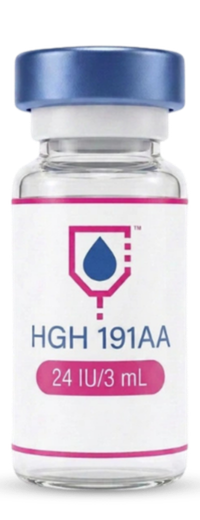
What Is Human Growth Hormone (HGH)?
A 191-Amino-Acid Hormone Used in Specialized Endocrine Care
Human growth hormone (HGH), also called somatropin when manufactured as a medication, is a 191-amino-acid protein hormone. The pituitary gland naturally produces growth hormone, which helps regulate growth, metabolism, and tissue maintenance throughout life.
HGH has attracted scientific and clinical interest because of its role in growth hormone deficiency and other specific endocrine conditions. Prescription somatropin has established medical uses, but its effects depend on diagnosis, dosing, and careful monitoring. HGH is not FDA-approved as a general anti-aging, fitness, or wellness treatment.
Have questions about peptide therapy? Call Advanced Mobile IV to speak with our team.

What Researchers Are Studying
-
Growth Hormone and IGF-1 Signaling
The pituitary releases growth hormone in pulses. Growth hormone acts on multiple tissues and stimulates production of insulin-like growth factor 1 (IGF-1), particularly in the liver. Researchers study this signaling system because it influences growth, metabolism, and tissue function.
-
Diagnosing Growth Hormone Deficiency
Clinicians evaluate suspected growth hormone deficiency using medical history, appropriate laboratory testing, and sometimes stimulation tests. A single random growth hormone measurement is generally insufficient because secretion varies throughout the day. Diagnosis requires specialized endocrine assessment.
-
Approved Clinical Uses and Safety
Prescription somatropin is used for certain pediatric growth disorders and adult growth hormone deficiency, among other product-specific indications. Treatment requires monitoring because fluid retention, joint discomfort, glucose changes, and other adverse effects can occur.
Quick Answer
HGH is the growth hormone itself. It is not a peptide that stimulates its release. Prescription somatropin is used for certain diagnosed conditions, including growth hormone deficiency. Its legitimate medical role should not be confused with claims that HGH routinely reverses aging, builds muscle, or improves performance in otherwise healthy adults.
At a Glance
What it is
A 191-amino-acid hormone; prescription versions are called somatropin.

Why it attracts attention
Its roles in growth, metabolism, and medically diagnosed hormone deficiency.

What the evidence looks like
Clinical benefits are established for specific approved indications, not for general anti-aging or performance claims.

Important context
Prescription HGH requires medical evaluation and monitoring for potentially serious adverse effects.
What We Know - and What Remains Unclear
HGH is sometimes promoted in wellness settings as a way to reverse aging, increase muscle, or accelerate recovery. Those claims go beyond what its approved medical uses and clinical evidence support.
Growth hormone has important physiological functions, but raising hormone levels is not automatically beneficial. In adults without a diagnosed deficiency, potential risks include swelling, joint pain, insulin resistance, and other complications. HGH should not be presented as a general longevity treatment.
Anyone considering HGH therapy should have an individualized conversation with a qualified clinician who can review symptoms, diagnostic testing, medical history, contraindications, potential adverse effects, and whether an approved treatment is appropriate.
Wellness, Delivered With Care


Frequently Asked Questions
Is HGH the same as Ipamorelin?
No. HGH is growth hormone itself. Ipamorelin is an investigational peptide studied for its interaction with signaling pathways that influence the body's own release of growth hormone.
Is HGH an FDA-approved medication?
Yes. Prescription somatropin products are FDA-approved for specific medical indications. Approval does not extend to general anti-aging, athletic performance, or routine wellness purposes.
Can HGH help build muscle or reduce body fat?
Growth hormone affects body composition, but changes in lean mass do not necessarily translate into improved strength or health. HGH is not an approved bodybuilding or weight-loss treatment.
What are the risks of HGH treatment?
Potential risks include fluid retention, joint pain, glucose intolerance, and other complications. Appropriate screening and ongoing clinical monitoring are essential.
Learn More About Peptide Therapy
Growth hormone medicine is complex, particularly when it involves the endocrine system. Advanced Mobile IV can help you understand the current conversation around HGH and other peptide therapies, the questions to ask, and whether a discussion with a qualified provider makes sense for you.
Call Advanced Mobile IV to Learn MoreThis page is for educational purposes only and is not medical advice. Research and clinical understanding of peptide therapy continue to evolve.
AMIV Wellness Hub
Recent Blog Posts

Mobile IV
Jan 08, 2026
