

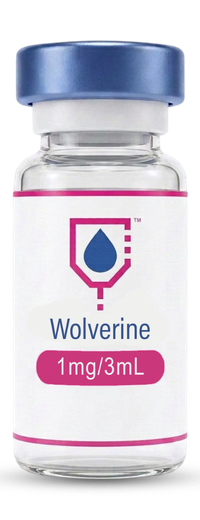
What Is Wolverine?
Understanding the BPC-157 + TB-500 Peptide Combination
"Wolverine" is an informal nickname used in wellness and performance communities for a protocol that combines two peptides: BPC-157 and TB-500.
The name is memorable, but it is not a scientific term - and it should not be understood as a promise of a particular result. Researchers have studied the two peptides individually in a number of preclinical settings. Published human research on the combination itself is still limited.
Have questions about peptide combinations? Call Advanced Mobile IV to speak with our team.

Why Researchers Study Peptide Combinations
-
Different Biological Questions
Scientists sometimes study combinations when individual compounds appear to interact with different biological pathways. The question is not whether one substance can "do everything," but whether their biological activity may be complementary.
-
BPC-157 Research
BPC-157 has been examined in laboratory and animal research involving connective tissues, the gastrointestinal tract, tissue biology, and cellular responses to physical stress.
-
TB-500 Research
TB-500 is a synthetic fragment related to thymosin beta-4. Researchers have studied thymosin-beta-4-related peptides in connection with cell migration, tissue remodeling, blood-vessel biology, and cellular communication.
Quick Answer
Wolverine refers to a combination of BPC-157 and TB-500. Interest in the pairing comes from the fact that researchers have investigated the two peptides in different areas of tissue biology and cellular signaling. That scientific rationale is still a hypothesis under study; it does not establish that combining the peptides produces a specific outcome or is superior to using either one alone.
Neither the Wolverine combination nor these peptides are FDA-approved to diagnose, treat, cure, or prevent disease.
At a Glance

What it is
An informal name for a protocol combining BPC-157 and TB-500.

Why the combination is discussed
The two peptides have been studied individually in different areas of biology.

What the research shows
Most evidence is preclinical, and research specifically evaluating the combination in humans is limited.

Important context
"Wolverine" is not an FDA-approved medical treatment or established clinical protocol.
What We Know - and What Remains Unclear
It is important to separate the science of the individual peptides from the science of the combination.
BPC-157 and TB-500 have each generated scientific interest. But that does not mean researchers have established that taking them together is more effective, safer, or more appropriate than considering either separately. Human research on the Wolverine combination itself is limited, and many important questions remain unanswered.
The "Wolverine" Name
The nickname comes from the comic-book character known for extraordinary healing. It is useful as shorthand within peptide conversations, but it can also create unrealistic expectations.
The real scientific conversation is much more measured: researchers are studying two peptides with different biological profiles, while human evidence on using them together is still incomplete.
Wellness, Delivered With Care


"Getting IV fluids when I was feeling ill was so beneficial to my healing. I'm grateful for AMIV and the service they provide. I would recommend everyone try this."
Jeff Weaver
Customer

"Very professional. The owners explained this treatment in detail. The procedure I received helped with fatigue and dehydration. I enjoyed the relaxed atmosphere of being in my own home."
Jennifer Belch
Customer
"I have had multiple experiences with Advance Mobile IV and all have been AMAZING! Painless pokes and incredible results, make me feel 100 times better. So thankful I found this company."
Cortlin Beck
Customer
Frequently Asked Questions
Is Wolverine a real scientific name?
No. Wolverine is an informal name for a peptide combination containing BPC-157 and TB-500.
Why do people combine BPC-157 and TB-500?
The pairing is based on interest in the different biological pathways researchers have studied for each peptide.
Is Wolverine better than one peptide alone?
There is no definitive human evidence showing that the combination is superior to either peptide used alone.
Is Wolverine FDA-approved?
No. The Wolverine combination is not FDA-approved to diagnose, treat, cure, or prevent any disease or medical condition.
Learn More About Peptide Therapy
Emerging peptide science is complicated, and the most responsible place to begin is with accurate information - not internet claims or one-size-fits-all protocols.
Advanced Mobile IV can help you understand the questions surrounding peptide therapy and arrange a conversation with a qualified provider when appropriate.
Call Advanced Mobile IV to Learn MoreThis page is for educational purposes only and is not medical advice. BPC-157 and TB-500 are investigational peptides; research is ongoing, and scientific understanding continues to evolve.
AMIV Wellness Hub
Recent Blog Posts

Mobile IV
Jan 08, 2026
