

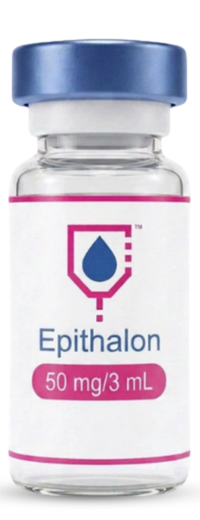
What Is Epithalon?
A Pineal-Related Peptide Under Study in Aging and Circadian Biology
Epithalon - also spelled Epitalon - is a synthetic peptide made of four amino acids. It grew out of research on epithalamin, a peptide preparation originally derived from the pineal gland.
It has attracted attention in longevity and peptide communities because researchers have studied it in relation to circadian biology, melatonin signaling, cellular aging, and telomerase activity. Those areas are scientifically interesting, but human evidence remains limited and does not establish an anti-aging outcome. Epithalon is not FDA-approved to diagnose, treat, cure, or prevent any disease or medical condition.
Have questions about peptide therapy? Call Advanced Mobile IV to speak with our team.

What Researchers Are Studying
-
Pineal and Circadian Biology
The pineal gland is involved in the body's circadian signaling and produces melatonin. Researchers have investigated epithalamin-related preparations and Epithalon in connection with pineal function and melatonin-related biology. That research is why people interested in sleep and circadian rhythms often encounter this peptide.
-
Telomeres and Telomerase
Telomeres are protective structures at the ends of chromosomes that are studied in relation to cellular aging. Laboratory research has examined whether Epithalon may influence telomerase activity, an enzyme involved in telomere biology. This does not establish that the peptide slows aging or extends lifespan in people.
-
Longevity Research
Epithalon is commonly discussed in longevity communities because it sits at the intersection of circadian biology and cellular-aging research. Researchers continue to investigate what those early findings mean, if anything, for human health and aging.
Quick Answer
Epithalon is a synthetic tetrapeptide - meaning it contains four amino acids. Researchers have investigated it in cell, animal, and limited human research involving the pineal gland, melatonin-related circadian signaling, and telomeres, the protective structures at the ends of chromosomes. This is why it is frequently discussed in longevity-oriented peptide conversations.
At a Glance

What it is
A synthetic four-amino-acid peptide, also known as Epitalon.

Why it attracts attention
Researchers have studied it in connection with pineal biology, circadian signaling, telomerase activity, and cellular aging research.

What the evidence looks like
The evidence includes cell and animal studies plus limited human research; important questions remain unanswered.

Important context
Epithalon is an investigational peptide and is not FDA-approved for any medical indication.
What We Know - and What Remains Unclear
Epithalon has a more extensive research history than many peptides discussed online, but that does not make it an established anti-aging treatment. The most responsible interpretation is that it is an interesting research peptide with substantial unanswered questions.
In peptide communities, people often discuss short, intermittent courses rather than continuous use. That is a community practice - not an established, evidence-based protocol - and it does not establish safety or effectiveness. A qualified provider can help you understand the current evidence, its limitations, and the questions worth asking before considering any peptide therapy.
Wellness, Delivered With Care


"Getting IV fluids when I was feeling ill was so beneficial to my healing. I'm grateful for AMIV and the service they provide. I would recommend everyone try this."
Jeff Weaver
Customer

"Very professional. The owners explained this treatment in detail. The procedure I received helped with fatigue and dehydration. I enjoyed the relaxed atmosphere of being in my own home."
Jennifer Belch
Customer
"I have had multiple experiences with Advance Mobile IV and all have been AMAZING! Painless pokes and incredible results, make me feel 100 times better. So thankful I found this company."
Cortlin Beck
Customer
Frequently Asked Questions
Is Epithalon the same as Epitalon?
Yes. Epithalon and Epitalon are two commonly used spellings for the same synthetic tetrapeptide.
Why is Epithalon associated with longevity discussions?
Researchers have studied it in relation to telomeres, telomerase activity, pineal biology, and circadian signaling. Those research areas have made it a subject of interest in longevity communities, but they do not establish an anti-aging benefit in humans.
Do people use Epithalon continuously?
Peptide communities often discuss short, intermittent courses rather than continuous use. There is no universally established, evidence-based protocol for its use.
Is Epithalon FDA-approved?
No. Epithalon is not FDA-approved to diagnose, treat, cure, or prevent any disease or medical condition.
Learn More About Peptide Therapy
Emerging peptide science is complicated. Advanced Mobile IV can help you understand the current conversation around Epithalon and other peptide therapies, the questions to ask, and whether a discussion with a qualified provider makes sense for you.
Call Advanced Mobile IV to Learn MoreThis page is for educational purposes only and is not medical advice. Epithalon is an investigational peptide; research is ongoing, and scientific understanding continues to evolve.
AMIV Wellness Hub
Recent Blog Posts

Mobile IV
Jan 08, 2026
