

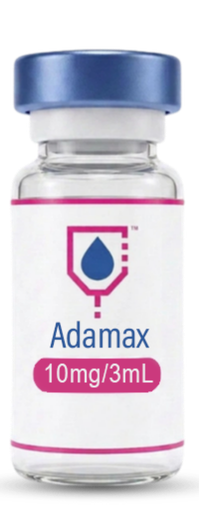
What Is Adamax?
A Semax-Related Peptide Under Study in Cognitive and Neurobiological Research
Adamax is a synthetic peptide related to Semax, a compound developed from a small fragment of adrenocorticotropic hormone (ACTH). It is discussed in peptide and nootropic communities for potential cognitive and neurobiological research applications.
Its proposed activity and clinical role remain incompletely defined. Adamax is not FDA-approved to diagnose, treat, cure, or prevent any disease or medical condition, and it should not be presented as an established treatment for memory, focus, mood, or neurological disorders.
Have questions about peptide therapy? Call Advanced Mobile IV to speak with our team.

What Researchers Are Studying
-
Semax-Related Peptide Design
Adamax is typically discussed as a peptide related to Semax, a synthetic analogue derived from an ACTH fragment. Semax has attracted scientific interest in parts of Eastern Europe and in preclinical research, but a relationship to Semax does not establish the effects, safety, or clinical role of Adamax itself.
-
Cognitive and Neurobiological Research
Researchers study certain neuroactive peptides to better understand signaling involved in learning, attention, stress response, and neuronal adaptation. Those research questions are not the same as proof that a specific peptide improves memory, concentration, motivation, or day-to-day performance in people.
-
Human Evidence and Clinical Translation
A proposed mechanism or an encouraging preclinical observation is only an early step in clinical translation. Well-designed human studies are needed to establish a product's appropriate use, dose, safety profile, and whether any observed effect is clinically meaningful.
Quick Answer
Adamax is generally described as a Semax-related synthetic peptide, but reliable published information on the specific compound and its clinical effects is limited. The responsible conversation is about research interest, not established human outcomes or a proven cognitive-enhancement treatment.
At a Glance
What it is
A synthetic peptide generally described as related to Semax.

Why it attracts attention
It is discussed in connection with cognitive and neurobiological research.

What the evidence looks like
Published human clinical evidence specific to Adamax appears limited, and it should not be confused with established neurological treatment.

Important context
Adamax is not FDA-approved to diagnose, treat, cure, or prevent any disease or medical condition.
What We Know - and What Remains Unclear
Adamax is sometimes described with confident language about mental clarity, focus, resilience, or neuroprotection. Those claims go beyond what limited published evidence on the specific compound can establish.
A peptide's relationship to Semax, or a biological rationale involving neurotrophic signaling, is not the same thing as a proven health outcome. Adamax should not be presented as a general treatment for cognitive decline, anxiety, depression, ADHD, brain injury, or neurological disease.
Anyone considering peptide therapy should have an individualized conversation with a qualified provider who can discuss the current evidence, limitations, health history, medications, and appropriate clinical considerations.
Wellness, Delivered With Care


Frequently Asked Questions
Is Adamax the same as Semax?
No. Adamax is generally described as related to Semax, but it is not simply another name for Semax. Specific formulation details and clinical evidence should not be assumed to be interchangeable.
What is Adamax studied for?
Adamax is discussed in connection with cognitive and neurobiological research. That research interest does not establish that it improves memory, attention, mood, or mental performance in people.
Is Adamax FDA-approved?
No. Adamax is not FDA-approved to diagnose, treat, cure, or prevent any disease or medical condition.
Can Adamax treat a neurological or mental-health condition?
No established clinical evidence supports presenting Adamax as a treatment for neurological disease, brain injury, anxiety, depression, ADHD, or another mental-health condition.
Learn More About Peptide Therapy
Peptide science is complicated, particularly when research is early and product-specific information is limited. Advanced Mobile IV can help you understand the current conversation around Adamax and other peptide therapies, the questions to ask, and whether a discussion with a qualified provider makes sense for you.
Call Advanced Mobile IV to Learn MoreThis page is for educational purposes only and is not medical advice. Adamax is investigational; research is ongoing, and scientific understanding continues to evolve.
AMIV Wellness Hub
Recent Blog Posts

Mobile IV
Jan 08, 2026
