

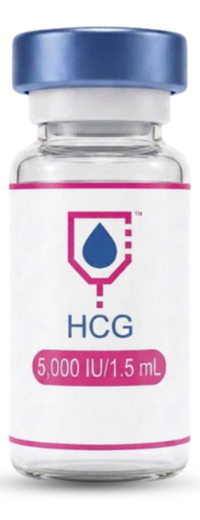
What Is HCG?
A Naturally Occurring Hormone Used in Reproductive and Endocrine Medicine
Human chorionic gonadotropin, or HCG, is a naturally occurring hormone produced primarily by the placenta during pregnancy. Although frequently offered alongside peptide therapies, HCG is a glycoprotein hormone rather than a conventional peptide.
It has established roles in reproductive and endocrine medicine because its biological activity resembles that of luteinizing hormone, or LH. HCG can interact with LH receptors and has FDA-approved prescription uses in selected fertility and male hormonal settings.
HCG should not be confused with the unapproved weight-loss products and protocols with which it has sometimes been associated. The FDA states that HCG is not approved for weight loss and that evidence does not support it as an effective treatment for obesity.
Have questions about peptide therapy? Call Advanced Mobile IV to speak with our team.

What Researchers Are Studying
-
Reproductive Hormone Signaling
HCG interacts with the same receptor activated by luteinizing hormone. Researchers and clinicians have long studied this pathway because LH signaling plays a central role in reproductive physiology and gonadal hormone production.
-
Male Endocrine Function
In males, stimulation of LH receptors on Leydig cells can influence testosterone production. HCG has established uses in selected hormonal conditions, but its role depends on the individual endocrine situation and should not be generalized into a universal testosterone-optimization strategy.
-
Fertility and Reproductive Medicine
HCG has established applications in reproductive medicine, including selected female infertility settings. Its use in these settings reflects specific effects on reproductive physiology and should be distinguished from general wellness or hormone-optimization claims.
Quick Answer
HCG is not testosterone, LH, or a weight-loss medication. It is a naturally occurring hormone that can activate the same receptor as LH. Prescription HCG has established medical uses in certain reproductive and endocrine settings, but those approved uses should be distinguished from broader claims involving weight loss, vitality, or general hormone optimization.
At a Glance

What it is
A naturally occurring glycoprotein hormone produced primarily by the placenta during pregnancy.

Why it attracts attention
HCG acts at the LH receptor and therefore can influence reproductive and gonadal hormone signaling in carefully selected clinical settings.

What the evidence looks like
HCG has established medical uses and FDA-approved prescription products for selected fertility and male hormonal indications.

Important context
HCG is not FDA-approved for weight loss, and scientific evidence does not support claims that HCG itself produces meaningful weight loss in people with obesity.
What We Know - and What Remains Unclear
HCG is sometimes discussed in wellness and hormone communities as though its established medical uses mean that it is broadly appropriate for testosterone optimization, vitality, body composition, or weight loss. That conclusion does not follow from its approved medical roles.
Unlike many experimental compounds discussed in peptide therapy, HCG has substantial clinical history and FDA-approved prescription uses. But an established role in reproductive or endocrine medicine is not evidence for every broader claim made about the hormone. HCG should not be presented as a general treatment for weight loss, vitality, body composition, or nonspecific hormone optimization.
Anyone considering peptide therapy should have an individualized conversation with a qualified provider who can discuss the current evidence, limitations, health history, medications, laboratory information, and reproductive and endocrine considerations.
Wellness, Delivered With Care


"Getting IV fluids when I was feeling ill was so beneficial to my healing. I'm grateful for AMIV and the service they provide. I would recommend everyone try this."
Jeff Weaver
Customer

"Very professional. The owners explained this treatment in detail. The procedure I received helped with fatigue and dehydration. I enjoyed the relaxed atmosphere of being in my own home."
Jennifer Belch
Customer
"I have had multiple experiences with Advance Mobile IV and all have been AMAZING! Painless pokes and incredible results, make me feel 100 times better. So thankful I found this company."
Cortlin Beck
Customer
Frequently Asked Questions
Is HCG the same as testosterone?
No. HCG is not testosterone. It acts at the LH receptor and can stimulate signaling involved in the body's own production of reproductive hormones.
Is HCG the same as luteinizing hormone?
No. HCG and LH are different hormones, although they act through the same receptor and have important similarities in their biological activity.
Is HCG an FDA-approved medication?
Yes. Prescription HCG products have FDA-approved uses in selected female fertility and male hormonal settings. Those indications do not mean HCG is approved for every hormone-related or wellness use.
Is HCG FDA-approved for weight loss?
No. The FDA specifically states that HCG is not approved for weight loss and that there is no substantial evidence that it increases weight loss.
Learn More About Peptide Therapy
Peptide science is complicated, particularly when it overlaps with reproductive and endocrine medicine. Advanced Mobile IV can help you understand the current conversation around HCG and other peptide therapies, the questions to ask, and whether a discussion with a qualified provider makes sense for you.
Call Advanced Mobile IV to Learn MoreThis page is for educational purposes only and is not medical advice. Research and clinical understanding of peptide therapy continue to evolve.
AMIV Wellness Hub
Recent Blog Posts

Mobile IV
Jan 08, 2026
